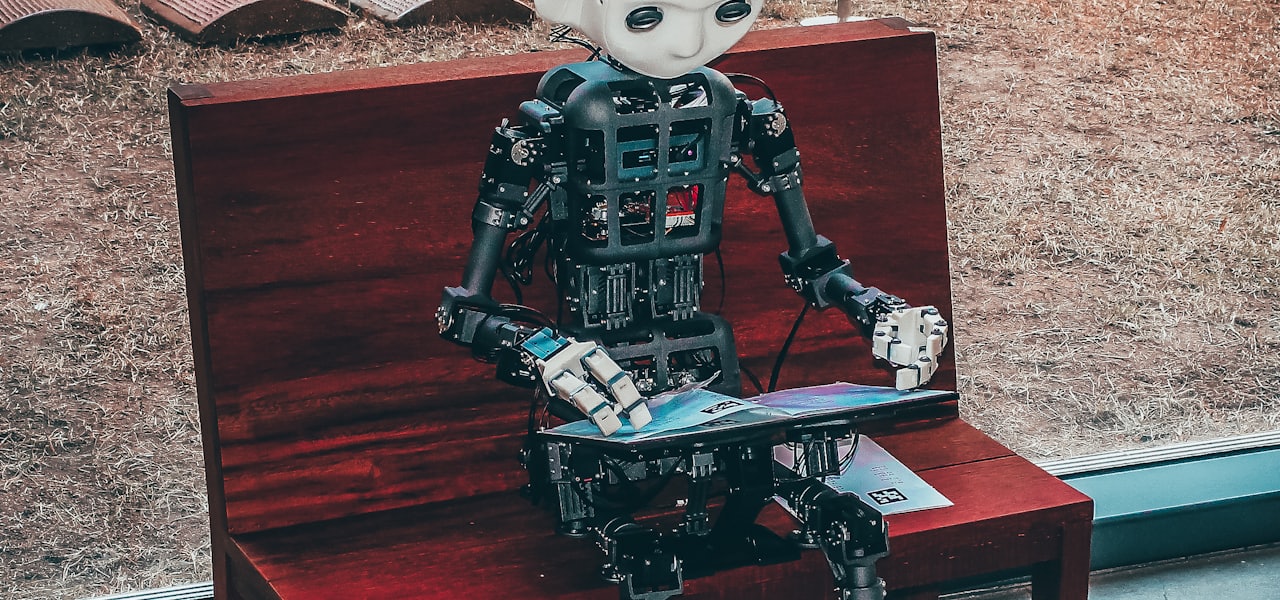
Felix, Net i Nika ("Felix, Net and Nika") is a series of Polish language science fiction books for teenagers, written by Rafał Kosik. It tells the adventures of three friends - Felix Polon, Net Bielecki and Nika Mickiewicz - who attend fictional Professor Kuszmiński Middle School in Warsaw. As of 2024, eighteen books have been published. == Books == There are currently 18 books in the series: Felix, Net and Nika and the Gang of Invisible People - November 2004. Felix, Net and Nika and the Theoretically Possible Catastrophe - November 2005 Felix, Net and Nika and the Palace of Dreams - November 2006 Felix, Net and Nika and the Trap of Immortality - November 2007 Felix, Net and Nika and the Orbital Conspiracy - November 2008 Felix, Net and Nika and the Orbital Conspiracy 2: Small Army - May 2009 Felix, Net and Nika and the Third Cousin - November 2009 Felix, Net and Nika and the Rebellion of Machines - March 2011 Felix, Net and Nika and the World Zero - November 2011 Felix, Net and Nika and the World Zero 2. Alternauts - November 2012 Felix, Net and Nika and the Extracurricular Stories - April 2013 Felix, Net and Nika and the Secret of Czerwona Hańcza - November 2013 Felix, Net and Nika and Curse of McKillian's House - November 2014 Felix, Net and Nika and (un)Safe Growing up - November 2015 Felix, Net and Nika and The End of The World as We Know It - November 2018 Felix, Net and Nika and No Chance - November 2022 Felix, Net and Nika and No Chance 2: other tomorrrow - 2023 Felix, Net and Nika and Fantology - June 2024 == Film == A feature motion picture, Felix, Net i Nika oraz Teoretycznie Możliwa Katastrofa (Felix, Net and Nika and the Theoretically Possible Catastrophe) was released in Poland on September 28, 2012. == Main characters == Felix Polon - a foresighted, fair-haired boy with dark brown eyes. He inherited the talent of constructing various things, especially robots, from his father- it saved his friends many times. He can make anything from nothing, always finds a way out of a situation; almost always has a plan. Together with his parents Marlene and Peter, grandmother Lucy, his dog Caban (a Black Russian Terrier) and Golem Golem a robot he built, Felix lives on Serdeczna Street in a small family house. Net Bielecki is quite tall & slim, has blue eyes and a high IQ level. "Net" is his nickname; his true name is unknown. He is the most trendy and 'awesome' in his entire class. He is a human calculator and is excellent in mathematics. He hates dictations and spelling because he is dyslexic. He is also quite lazy, absent-minded and sometimes hysterical, or panicking. His dark blond hair looks like a heap of hay after a grenade explosion. He is best in ICT and writes many of his own programs. His love interest is Nika Mickiewicz. Together with his parents Lila and Mark, and their newborn twins nicknamed Pompek and Prumcia he lives on the top floor of a Penthouse apartment. Nika Mickiewicz is a girl with a character. She is very brave and mature. She likes reading books. She has curly, red hair, green eyes and a few freckles. She is not very rich; she wears second-hand clothes and her only pair of black Dr. Martens shoes. She lives in a tiny apartment. She is an orphan, but hides that fact from people for almost 3 years. However, Felix and Net, her best and possibly only friends, find out about it. She also has abnormal abilities. She can move distant objects using her powers, ski uphill and knows some things by intuition. In other words, she is telekinetic. Manfred is a friendly AI program started and never finished by Net's father, and mastered and programmed further by Net himself. He likes going on adventures and solving mysteries with the trio much more than his actual job, which is controlling the traffic lights. He helped out the three friends many times and is their reliable and faithful friend. Morten is also an AI program, but he is the antagonist of the trio. He appears in all 6 books of Felix Net and Nika. In the first book, the trio thinks they finished him off for good, but as we find out later, he comes back in the third book. In the fifth/sixth book, he was the mastermind of the Orbital Conspiracy. Also, Morten's logo, appears in all 6 books and it is still a mystery what he has to do with each event.
Outline of the Python programming language
The following outline is provided as an overview of and topical guide to Python: Python is a general-purpose, interpreted, object-oriented, functional, multi-paradigm, and dynamically typed programming language known for its emphasis on code readability and broad standard library. Python was created by Guido van Rossum and first released in 1991. It emphasizes code readability and developer productivity. == What type of language is Python? == Programming language — artificial language designed to communicate instructions to a machine. Object-oriented programming — built primarily around objects and classes. Functional programming — supports functions as first-class objects. Scripting language — often used for automation and small programs. General-purpose programming language — designed for a wide variety of application domains. Dynamically typed — type checking occurs at runtime. Interpreted language — code is executed by an interpreter. Multi-paradigm — supports procedural, object-oriented, and functional programming. == History of Python == ABC (programming language) – precursor to Python Python was started by Guido van Rossum in 1989 and first released in 1991. Python 2 — major version released in 2000, officially retired in 2020. Python 3 — released in 2008 == General Python concepts == == Issues and limitations == Performance — generally slower than many compiled languages such as C or Java can be mitigated by C extensions or JIT compilers (PyPy). Global interpreter lock — limits parallel CPU-bound threads in CPython Memory consumption — high memory use compared to some lower-level languages Version compatibility — Python 2 vs Python 3 differences caused migration issues == Python implementations == CPython — reference implementation in C IronPython — Python for .NET Jython — Python for the JVM MicroPython — Python for microcontrollers and embedded systems Nuitka — compiler that packages user code with CPython into a static binary PyPy — JIT-compiled Python interpreter for speed PythonAnywhere — freemium hosted Python installation that runs in the browser Stackless Python — Python with lightweight concurrency features == Python toolchain == List of Python software Comparison of Python IDEs Comparison of server-side web frameworks for Python List of Python frameworks List of Python libraries List of unit testing frameworks for Python Python Package Index == Notable projects using Python == YouTube (backend) Instagram (backend) Dropbox Reddit OpenStack Blender (scripting and plugins) SageMath NumPy Pandas TensorFlow == Python development communities == ActiveState — commercial Python distributions and support Anaconda, Inc. — Python data science ecosystem GitHub Python Software Foundation Python Package Index (PyPI) — third-party software repository for Python == Example source code == Articles with example Python code == Python publications == === Books about Python === Automate the Boring Stuff with Python – Creative Commons Python book Alex Martelli — Python in a Nutshell and Python Cookbook Mark Pilgrim – Dive into Python Naomi Ceder — The Quick Python Book Wes McKinney — Python for Data Analysis Zed Shaw – Learn Python the Hard Way === Textbooks === Core Python Programming == Python programmers == == Python conferences == EuroPython – annual Python conference in Europe PyCon – the largest annual convention for the Python community PyData – conference series focused on data analysis, machine learning, and scientific computing with Python SciPy Conferences – focused on the use of Python in scientific computing and research DjangoCon – a conference dedicated to the Django web framework PyOhio – a free regional Python conference held in Ohio == Python learning resources == Codecademy – interactive Python programming lessons GeeksforGeeks – tutorials, coding examples, and interactive programming for Python concepts and data structures. Kaggle – free Python courses focused on data science and machine learning. Python.org Tutorial – the official Python tutorial from the Python Software Foundation. Real Python – articles, tutorials, and courses for Python developers. W3Schools – beginner-friendly Python tutorials. Wikibooks Python Programming – free open-content textbook on Python. === Competitive programming === Codeforces – an online platform for programming contests that supports Python submissions Codewars – gamified coding challenges supporting Python HackerRank – competitive programming and interview preparation site with Python challenges Kaggle – while focused on data science competitions, it also includes Python-based problem solving. LeetCode – online judge and problem-solving platform where Python is widely used
Mira Murati
Ermira "Mira" Murati (born 16 December 1988) is an Albanian-American business executive. She launched an AI startup called Thinking Machines Lab in February 2025. Previously she was the chief technology officer of OpenAI, and a senior product manager at Tesla. == Early life and education == Murati was born on 16 December 1988 in Vlorë, Albania. She is fluent in Italian. At age 16, she won a United World Colleges (UWC) scholarship to study at Pearson College on Vancouver Island in Canada, from which she graduated in 2007 with an International Baccalaureate. After Pearson, she went to the United States to pursue further studies through a dual-degree program, earning a Bachelor of Arts from Colby College in 2011, and a Bachelor of Engineering degree from Dartmouth College's Thayer School of Engineering in 2012. == Career == === Early career === Murati interned in 2011 as a summer analyst at Goldman Sachs in Tokyo, Japan. She then briefly worked for Zodiac Aerospace as an intern before joining the electric car company Tesla in 2013 as a product manager on the Model X. From 2016 to 2018, she worked for the augmented reality start-up Leap Motion (now Ultraleap). === OpenAI === In 2018, she joined OpenAI as the VP of Applied AI and partnerships. She became chief technology officer (CTO) in May 2022. She led OpenAI's work on ChatGPT, Dall-E, Codex and Sora, while overseeing its research, product and safety teams. She oversaw technical advancements and direction of OpenAI's various projects, including the development of advanced AI models and tools. Murati worked on several of OpenAI's notable products, such as the Generative Pretrained Transformer (GPT) series of language models. Commenting about the potential loss of creative jobs to AI, Murati said that "maybe [the jobs] shouldn’t have been there in the first place". In October 2023, Murati was ranked 57th on Fortune's list of "The 100 Most Powerful Women in Business of 2023". In November 2023, Murati became interim chief executive officer of OpenAI following the removal of Sam Altman from the job. She had collaborated with Ilya Sutskever, whose 52-page memo outlining concerns about Altman relied heavily on screenshots and information she provided, which contributed to the board's decision to oust him. Murati was replaced by Emmett Shear three days later, who left when Altman was reinstated five days later. Following these events, Murati returned to her role as CTO. In June 2024, Dartmouth College awarded Murati an honorary Doctor of Science for having "democratized technology and advanced a better, safer world for us all". In September 2024, Murati announced that she was stepping down as CTO to allow her the opportunity to "do my own exploration". This move came amid a wider executive exodus as OpenAI chief research officer Bob McGrew and a vice president of research, Barret Zoph, also announced their departures soon after. === Thinking Machines Lab === In February 2025, Murati launched Thinking Machines Lab, a new public benefit corporation aiming "to make AI systems more widely understood, customizable, and generally capable". She was reported to have hired "a team of about 30 leading researchers and engineers from competitors including Meta, Mistral, and OpenAI." People involved with the startup include OpenAI cofounder John Schulman, and advisors Alec Radford and Bob McGrew. The following month, Bloomberg reported that the company had reached an estimated valuation of $9 billion, with an "average founder stake value" of $1.4 billion. In April 2025, Thinking Machines Lab reportedly aimed for a $2 billion seed round (requiring a minimum investment of $50 million). The round was led by Andreessen Horowitz and included participation from the government of Albania, valuing the company at $12 billion. Thinking Machines Lab follows a governance structure wherein Mira Murati holds a deciding vote on board matters, weighted to provide her with a majority decision-making capability. In October 2025, Thinking Machines Lab announced its first product, Tinker, a tool used to create custom frontier AI models. == Publications == Murati, Ermira (Spring 2022). "Language & Coding Creativity". Daedalus. 151 (2). Cambridge, MA: American Academy of Arts and Sciences (AAAS): 156–167. doi:10.1162/daed_a_01907. Retrieved 25 September 2024.
Eimear Kenny
Eimear E. Kenny is a researcher in population genetics and translation genomics, and is the Founding Director of the Institute for Genomic Health, and Endowed Chair and Professor of Genomic Health at the Icahn School of Medicine at Mount Sinai. She is known for novel approaches in computational genomics, advancing the study of human genetic variation and its connection to disease risk and diagnosis. Her research has laid the foundation for integrating artificial intelligence (AI) and genomics into precision medicine and routine clinical care. By combining genomics, computer science, and medicine, her work leverages genomic sequencing technologies and machine learning algorithms to uncover insights that improve patient care, accelerate genomic data analysis, and enable the future of AI-driven healthcare. She has led multiple genomics-based clinical trials, applying computational biology and AI in clinical settings to advance genomic medicine and precision healthcare. == Research == A recipient of the Early-Career Award from the American Society of Human Genetics (USA), Kenny, as of 2024, leads a team in genetics, computer science, and medicine, focusing on genetic ancestry, large-scale genomics, clinical trials, and genomic medicine at the Institute for Genomic Health. The lab works to advance understanding of genetic ancestry and its impact on health in order to inform better clinical medicine models. She is recognized for her work to leverage biobanks for translational genomics and her development of new genetic tests an strategies for health care management. In one study, she and her colleagues investigated genetic disorders that might be under-diagnosed due to insufficient data, and found a variant in a collagen gene associated with Steel syndrome. This syndrome caused short stature and bone and joint issues and was thought to be rare. However, the study revealed it is common in individuals with Puerto Rican ancestry. Three of Kenny's genomic medicine clinical trials assessed how to bring new technology, such as digital apps, or information, such as polygenic risk scores, into routine clinical care. In the 2010s, Kenny was instrumental in several large-scale sequencing studies, including the 1000 Genomes Project, the Exome Sequencing Project, the Genome Sequencing Project, and the Trans-Omics for Precision Medicine. In 2012, she led work that discovered the variant responsible for blond hair in Melanesia, work that was featured in the Smithsonian NHGRI Human Genome Exhibit in Washington, D.C. In 2017, her group was one of the first to demonstrate that polygenic risk scores derived in predominantly European populations have reduced accuracy when applied in populations now widely acknowledged as a major challenge in the field of genomic risk prediction. As of 2024, she is Principal Investigator in many NIH-funded international consortium focused on computational genomics and genomic medicine, including Electronic Medical Records and Genomics, Polygenic Risk Methods in Diverse Populations, and the Human Pangenome Reference Consortium. In 2023, Kenny played a key role in a groundbreaking advancement in genomics research by helping to map a diverse human pangenome—a major shift from reliance on a single reference genome. Unlike the earlier genetic map, based on one man of mixed European and African ancestry in Buffalo, this new pangenome project captures far greater human genetic diversity. As reported by The Washington Post, Kenny's work demonstrates how a more inclusive human genome can drive discoveries in rare genetic diseases, improve genomic medicine, and accelerate the future of precision healthcare. Kenny was co-developer and current license holder for Random Forest adMIXture (RFMix), a patented software for inferring continental and sub-continental ancestry at genomic loci. == Education and career == Kenny graduated from Trinity College Dublin with a BA in Biochemistry in 1999 and did a masters in Bioinformatics at Leeds University. She received her PhD in Computational Genomics at Rockefeller University, and did her post-doctoral work in the lab of Dr. Carlos D. Bustamante at Stanford University. === Academic appointments === As of 2024, at Mount Sinai, she serves as the Endowed Chair and Professor of Genomic Health, Professor at the Department of Medicine and Professor at the Department of Genetics and Genomic Sciences. Since 2018 she has served as the Founding Director of the Institute for Genomic Health, and since 2022, she also serves as the Founding Director of the Center for Translational Genomics. She is also the Director of Translational Research, Division for Genomic Medicine. Former appointments include Assistant Professor at the Department of Genetics and Genomic Sciences and Member at The Charles Bronfman Institute of Personalized Medicine, both at Mount Sinai. She was also Bioinformatics Programmer at the California Institute of Technology, and research assistant at the Massachusetts Institute of Technology. == Publications == As of 2024, Kenny is an advisor to Cell Genomics. Google Scholar reports 50,623 citations, an h-index of 66 and an i10-index of 130. The five most-cited articles she contributed to are: Auton, A; Brooks, LD; Durbin, RM; Garrison, EP; Kang, HM; Korbel, JO; Marchini, JL; McCarthy, S; McVean, GA; Abecasis, GR (2015). "A global reference for human genetic variation". Nature. 526 (7571): 68–74. Bibcode:2015Natur.526...68T. doi:10.1038/nature15393. PMC 4750478. PMID 26432245.. Cited by 14847 Abecasis, GR; Auton, A; Brooks, LD; DePristo, MA; Durbin, RM; Handsaker, RE; Kang, HM; Marth, GT; McVean, GA (2012). "An integrated map of genetic variation from 1,092 human genomes". Nature. 491 (7422): 56–65. Bibcode:2012Natur.491...56T. doi:10.1038/nature11632. PMC 3498066. PMID 23128226.. Cited by 8287 Jacob A. Tennessen et al. Evolution and Functional Impact of Rare Coding Variation from Deep Sequencing of Human Exomes.Science337,64–69(2012).DOI:10.1126/science.1219240 Cited by 1886 Taliun, D.; Harris, D.N.; Kessler, M.D.; et al. (2021). "Sequencing of 53,831 diverse genomes from the NHLBI TOPMed Program". Nature. 590 (7845): 290–299. Bibcode:2021Natur.590..290T. doi:10.1038/s41586-021-03205-y. PMC 7875770. PMID 33568819.. Cited by 1369 Vilhjálmsson, BJ; et al. (2015). "Modeling Linkage Disequilibrium Increases Accuracy of Polygenic Risk Scores". Am J Hum Genet. 97 (4): 576–92. doi:10.1016/j.ajhg.2015.09.001. PMC 4596916. PMID 26430803.. Cited by 1327
Luciano Floridi
Luciano Floridi (Italian: [luˈtʃaːno ˈflɔːridi]; born 16 November 1964) is an Italian and British philosopher. He is John K. Castle Professor in the Practice of Cognitive Science and Founding Director of the Digital Ethics Center at Yale University. He is also a Professor of Sociology of Culture and Communication at the University of Bologna, Department of Legal Studies, where he is the director of the Centre for Digital Ethics. Furthermore, he is adjunct professor ("distinguished scholar in residence") at the Department of Economics, American University, Washington D.C. He is married to the neuroscientist Anna Christina Nobre. Floridi is best known for his work on two areas of philosophical research: the philosophy of information, and information ethics (also known as digital ethics or computer ethics), for which he received many awards, including the Knight of the Grand Cross of the Order of Merit, Italy's most prestigious honor. According to Scopus, Floridi was the most cited living philosopher in the world in 2020. Between 2008 and 2013, he held the research chair in philosophy of information and the UNESCO Chair in Information and Computer Ethics at the University of Hertfordshire. He was the founder and director of the IEG, an interdepartmental research group on the philosophy of information at the University of Oxford, and of the GPI the research Group in Philosophy of Information at the University of Hertfordshire. He was the founder and director of the SWIF, the Italian e-journal of philosophy (1995–2008). He is a former Governing Body Fellow of St Cross College, Oxford. == Early life and education == Floridi was born in Rome in 1964, and studied at Rome University La Sapienza (laurea, first class with distinction, 1988), where he was originally educated as a historian of philosophy. He soon became interested in analytic philosophy and wrote his tesi di laurea (roughly equivalent to an M.A. thesis) in philosophy of logic, on Michael Dummett's anti-realism. He obtained his Master of Philosophy (1989) and PhD degree (1990) from the University of Warwick, working in epistemology and philosophy of logic with Susan Haack (who was his PhD supervisor) and Michael Dummett. Floridi's early student years are partly recounted in the non-fiction book The Lost Painting: The Quest for a Caravaggio Masterpiece, where he is "Luciano". During his graduate and postdoctoral years, he covered the standard topics in analytic philosophy in search of a new methodology. He sought to approach contemporary problems from a heuristically powerful and intellectually enriching perspective when dealing with lively philosophical issues. During his graduate studies, he began to distance himself from classical analytic philosophy. In his view, the analytic movement had lost its way. For this reason, he worked on pragmatism (especially Peirce) and foundationalist issues in epistemology and philosophy of logic, as well as the history of skepticism. == Academic career and previous positions == Floridi started his academic career as a lecturer in philosophy at the University of Warwick in 1990–1991. He joined the Faculty of Philosophy of the University of Oxford in 1990 and the OUCL (Oxford's Department of Computer Science) in 1999. He was junior research fellow (JRF) in philosophy at Wolfson College, Oxford University (1990–1994), a Frances Yates Fellow in the History of Ideas at the Warburg Institute, University of London (1994–1995) and Research Fellow in philosophy at Wolfson College, Oxford University (1994–2001). During these years in Oxford, he held lectureships in different Colleges. Between 1994 and 1996, he also held a post-doctoral research scholarship at the Department of Philosophy, University of Turin. Between 2001 and 2006, he was Markle Foundation Senior Research Fellow in Information Policy at the Programme in Comparative Media Law and Policy, Oxford University. Between 2002 and 2008, he was associate professor of logic at the Università degli Studi di Bari. In 2006, he became Fellow by Special Election of St Cross College, Oxford University, where he played for the squash team. In 2008, he was appointed full professor of philosophy at the University of Hertfordshire, to hold the newly established research chair in philosophy of information and, in 2009, the UNESCO Chair in Information and Computer Ethics, a position which he held until 2013, when he moved back to Oxford. In 2017, Floridi became a fellow of the Alan Turing Institute and the chair of its Data Ethics Group, holding these positions until 2021 and 2020, respectively. Since 2010 he has been editor-in-chief of Philosophy & Technology (Springer). In January 2023, Floridi announced he would move to Yale at the beginning of the academic year 2023–2024, to take over the position of founding director of the Yale Digital Ethics Center. == Philosophical views == One of Floridi's key contributions is his formulation of the 'Philosophy of Information' (PoI). The PoI provides a framework for understanding the nature of information and its role in the world. According to Floridi, information is a vital resource that shapes our knowledge and understanding of the world. It is not simply a neutral representation of reality but a part of the world, with its own properties, effects, and moral implications. Floridi's PoI has several key components including an 'ontology of information', which defines the nature of information, an 'ethics of information', which provides a framework for evaluating the moral implications of information and information technologies, an 'epistemology of information', that analyses the role of information in the development of knowledge and science, and a 'logic of information', the concentrates on the more formal aspects. The PoI also includes a theory of the 'information environment', the infosphere, which encompasses the physical, social, and cultural contexts in which information is produced, used, and communicated. == Recognitions and awards == 2022 - Knight of the Grand Cross - First Class of the Order of Merit (Cavaliere di Gran Croce Ordine al Merito della Repubblica Italiana, the highest honor in the Italian Republic), awarded through a special decree by the president of the Italian Republic Sergio Mattarella for his work on the philosophy and ethics of information. 2022 - Fellow of the Accademia delle Scienze dell'Istituto di Bologna 2021 - Honorary Doctorate (Laurea honoris causa) in Informatics, University of Skövde, Sweden, for "his groundbreaking work on the philosophy of information". 2020 - Premio Udine Filosofia, Mimesis Festival, for The Logic of Information (OUP, 2019) 2020 - Premio Socrate, Cesare Landa Foundation, for philosophical communication 2019 - CogX Award, for "outstanding achievement in ethics of AI" 2019 - Gilbert Ryle Lectures, Trent University 2019 - Premio Aretè "Maestro della Responsabilità", Nuvolaverde, Confindustria, Gruppo 24 Ore Salone della CSR e dell'innovazione sociale, for ethics of communication 2018 - Thinker Award, IBM, for AI Ethics 2018 - Premio Conoscenza, Conferenza dei Rettori delle Università Italiane (CRUI, equivalent of Universities UK), for achievements in research and communication about digital ethics 2017 - Fellow of the Academy of Social Sciences 2016 - J. Ong Award, Media Ecology Association, for The Fourth Revolution (OUP, 2016) 2016 - Copernicus Scientist Award, Institute for Advanced Studies of the University of Ferrara, in recognition of research in the ethics and philosophy of information 2015 - Fernand Braudel Senior Fellow, European University Institute 2014-15 - Cátedras de Excelencia, University Carlos III of Madrid, for research in philosophy and ethics of information 2013 - Member of the Académie Internationale de Philosophie des Sciences 2013 - Fellow of the British Computer Society 2013 - Weizenbaum Award, International Society for Ethics and Information Technology, for "very significant contribution to the field of information and computer ethics, through his research, service, and vision" 2012 - Covey Award, International Association for Computing and Philosophy, for "outstanding research in computing and philosophy" 2011-12 - Fellow, Center for Information Policy Research, University of Wisconsin–Milwaukee 2011 - Honorary Doctorate (Laurea honoris causa) in philosophy, University of Suceava, Romania, for "his leading research in the philosophy and ethics of information" 2011 - Fellow, World Technology Network, NY, in the category "ethics and technology" 2010 - Vice Chancellor Research Award, University of Hertfordshire 2009 - Fellow of the Society for the Study of Artificial Intelligence and the Simulation of Behaviour (AIBS) 2009-10 - Gauss Professor of the Akademie der Wissenschaften, Göttingen, in recognition of research in the philosophy of information (first philosopher to receive the award, generally given to mathematicians or physicists) 2009 - Barwise Prize, American Philosophical Asso
Cuboid (computer vision)
In computer vision, the term cuboid is used to describe a small spatiotemporal volume extracted for purposes of behavior recognition. The cuboid is regarded as a basic geometric primitive type and is used to depict three-dimensional objects within a three dimensional representation of a flat, two dimensional image. == Production == Cuboids can be produced from both two-dimensional and three-dimensional images. One method used to produce cuboids utilizes scene understanding (SUN) primitive databases, which are collections of pictures that already contain cuboids. By sorting through SUN primitive databases with machine learning tools, computers observe the conditions in which cuboids are produced in images from SUN primitive databases and can learn to produce cuboids from other images. RGB-D images, which are RGB images that also record the depth of each pixel, are occasionally used to produce cuboids because computers no longer need to determine the depth of an object, as they typically do because depth is already recorded. Cuboid production is sensitive to changes in color and illumination, blockage, and background clutter. This means that it is difficult for computers to produce cuboids of objects that are multicolored, irregularly illuminated, or partially covered, or if there are many objects in the background. This is partially due to the fact that algorithms for producing cuboids are still relatively simple. == Usage == Cuboids are created for point cloud-based three-dimensional maps and can be utilized in various situations such as augmented reality, the automated control of cars, drones, and robots, and object detection. Cuboids allow for software to identify a scene through geometric descriptions in an “object-agnostic” fashion. Interest points, locations within images that are identified by a computer as essential to identifying the image, created from two-dimensional images can be used with cuboids for image matching, identifying a room or scene, and instance recognition. Interest points created from three dimensional images can be used with cuboids to recognize activities. This is possible because interest points aid software to focus on only the most important aspects of the images. RGB-D images and SLAM systems are used together in RGB-D SLAM systems, which are employed by Computer-aided design systems to generate point cloud-based three-dimensional maps. Most industrial multi-axis machining tools use computer-aided manufacturing and subsequently work in cuboid work spaces.
POSC Caesar
POSC Caesar Association (PCA) is an international, open and not-for-profit, member organization that promotes the development of open specifications to be used as standards for enabling the interoperability of data, software and related matters. PCA is the initiator of ISO 15926 "Integration of life-cycle data for process plants including oil and gas production facilities" and is committed to its maintenance and enhancement. Nils Sandsmark has been the General Manager of POSC Caesar Association since 1999 and Thore Langeland, Norwegian Oil Industry Association (Norwegian: Oljeindustriens Landsforening, OLF), is the chairman of the board. == History == === Caesar Offshore === The first predecessor of POSC Caesar Association, the Caesar Offshore program, started in 1993. The original focus was on standardizing technical data definitions for capital intensive projects at the handover from the EPC contractor to the owner/operators of onshore and offshore oil and gas production facilities. The program was sponsored by The Research Council of Norway, two EPC contractors (Aker Maritime and Kværner), three owners/operators (Norsk Hydro, Saga Petroleum and Statoil) and DNV as service provider and project owner. === POSC Caesar project === During the period 1994–96, Caesar Offshore Program was defined as a project of Petrotechnical Open Software Corporation (POSC) (now Energistics), and changed its name to the POSC Caesar Project. In 1995 the project was joined by BP, Brown and Root and Elf Aquitaine and in 1997 by Intergraph, IBM, Oracle, Lloyd's, Shell, ABB and UMOE Technologies. During that time, POSC Caesar also became a member of European Process Industries STEP Technical Liaison Executive (EPISTLE) where it collaborates with PISTEP (UK), and USPI-NL (The Netherlands) on the development of ISO 10303, also known as "Standard for the Exchange of Product model data (STEP)". === POSC Caesar Association === In 1997, POSC Caesar Association was founded as an independent, global, non-profit, member organization. POSC Caesar Association serves an international membership and collaborates with other international organizations. It has its main office in Norway. Albeit the name of POSC Caesar Association still hints to its past as a project within the Petrotechnical Open Software Corporation (POSC) (now Energistics), from 1997 onwards, the organization has been independent. Energistics and POSC Caesar Association do collaborate, and are formally member in each other's organization. == Membership == POSC Caesar Association has with its current 36 members from around the world and has established an international footprint (with a strong membership in Norway) that includes a variety of backgrounds, from academia and solution providers to engineering contractors and owners/operators. The members are (subdivided by organization type): Associations: Energistics (USA) and The Norwegian Oil Industry Association (OLF, Norway); Universities and Research Institutes: International Research Institute of Stavanger (IRIS, Norway), Norwegian University of Science and Technology (NTNU, Norway), Korea Advanced Institute of Science and Technology (KAIST, Korea), SINTEF (Norway), University of Bergen (Norway), University of Oslo (Norway), University of Stavanger (Norway), University of Tromsø (Norway) and Western Norway Research Institute (Norway); Oil and Gas Companies: BP (UK), Petronas (Malaysia) and Statoil (Norway); Engineering contractors and consultants: Akvaplan-niva (Norway), Aker Solutions (Norway), Asset Life Cycle Information Management (ALCIM, Malaysia), CAESAR systems (USA), Bechtel (USA), Det Norske Veritas (DNV, Norway), Information Logic (USA) and iXIT Engineering Technology (Germany), Phusion IM Ltd (UK); Solution providers: Aveva (UK), Bentley Systems (USA), Jotne EPM Technology (Norway), Epsis (Norway), Eurostep (Sweden), International Business Machines Corporation (IBM, USA), Siemens - Comos Industry Solutions (before Innotec) (Germany), Intergraph (USA), Invenia (Norway), Keel Solution (Denmark), Noumenon (UK), NRX (Canada), Octaga (Norway) and Tektonisk (Norway). In general, the organization holds three membership meetings a year; one in January / February in North-America (typically USA), one in April / May in Europe (typically Norway) and one in October in Asia (typically Malaysia). == Activities and services == === Initiator and custodian of ISO 15926 === In consultation with the other EPISTLE members and the International Organization for Standardization (ISO), it was decided in 2003 (some say already in 1997) that for modeling-technical reasons it was better to discontinue the development of ISO 10303 and to initiate the development of ISO 15926 "Integration of life-cycle data for process plants including oil and gas production facilities." Over the years, the scope of the standard has increased from the initial capital-intensive projects in the upstream oil and gas industry, to include also relevant terminology for downstream oil and gas industry applications and to deal with real-time data related to the actual oil and gas production. ISO 15926 has also over the years evolved from a dictionary (a list of terms with definitions), over a taxonomy (added hierarchy) to an ontology (a formal representation of a set of concepts within a domain and the relationships between those concepts). ISO 15926 is therefore sometimes nicknamed the "Oil and Gas Ontology", for some considered to be an essential prerequisite together with Semantic Web technologies to get to better interoperability, an optimal use of all available data across boundaries and an increase in efficiency. This is what some call the next generation of Integrated Operations. === Reference data services === Placeholders: Flow scheme of WIP - RDS - ISO and role of SIGs RDS Standards in database pilot (ISO) === Special interest groups === Placeholders: Overview of SIGs Drilling and Completion Reservoir and Production Operations and Maintenance == Projects == There are a number of projects (co-)organized by POSC Caesar Association working on the extension of the ISO 15926 standard in different application areas. === Capital intensive projects application domain === The following projects are running at the moment (August 2009): The ADI Project of FIATECH, to build the tools (which will then be made available in the public domain) The IDS Project of POSC Caesar Association, to define product models required for data sheets A joint collaboration project between FIATECH POSC Caesar Association is the ADI-IDS project is the ISO 15926 WIP === Upstream oil and gas industry application domain === The following projects are currently running (August 2009): The Integrated Operations in the High North (IOHN) project is working on extending ISO 15926 to handle real-time data transmission and (pre-)processing to enable the next generation of Integrated Operations. The Environment Web project to include environmental reporting terms and definitions as used in EPIM's EnvironmentWeb in ISO 15926. Finalised projects include: The Integrated Information Platform (IIP) project working on establishing a real-time information pipeline based on open standards. It worked among others on: Daily Drilling Report (DDR) to including all terms and definitions in ISO 15926. This standard became mandatory on February 1, 2008 for reporting on the Norwegian Continental Shelf by the Norwegian Petroleum Directorate (NPD) and Safety Authority Norway (PSA). NPD says that the quality of the reports has improved considerably since. Daily Production Report (DPR) to including all terms and definitions in ISO 15926. This standard was tested successfully on the Valhall (BP-operated) and Åsgard (StatoilHydro-operated) fields offshore Norway. The terminology and XML schemata developed have also been included in Energistics’ PRODML standard. == Conferences and events == === Semantic Days === === Sogndal academic network meeting === == Collaborations == POSC Caesar is collaborating with a number of standardization bodies, including: Mimosa: collaboration on open information standards for Operations and Maintenance mainly for the downstream oil and gas industry; FIATECH: collaboration on open information standards for life cycle data of capital projects; Energistics: collaboration on information standards for the upstream oil and gas industry, including WITSML and PRODML; OASIS: collaboration on e-business standards; ISO TC184/SC4: the host of the ISO 15926 standard.